|
The Seventh Fire Prophecy
The Prophecies Are Fulfilled...but for one
Fulfilling the Seventh Fire Prophecy
The Story of the Opposition on the Road to
Extinction: Protest Camp in Minneapolis
Who Deems What Is Sacred?
Savage Police
Brutality vs Nonviolence of the People
Larry Cloud-Morgan in Memoriam
Mendota Sacred Sites - Affidavit of Larry
Cloud-Morgan
Cloud-Morgan, Catholic activist, buried
with his peace pipe
 Maritime
Pine Pycnogenol
is
the super-antioxidant that has
been tried and tested by over 30 years of research for many
acute and chronic disorders. The Ojibwe knew about it almost 500
years ago. Didn't call it that, though. White man took
credit. Maritime
Pine Pycnogenol
is
the super-antioxidant that has
been tried and tested by over 30 years of research for many
acute and chronic disorders. The Ojibwe knew about it almost 500
years ago. Didn't call it that, though. White man took
credit.
Shegoi -
Natural herbs for Cold Sores, Chickenpox, Genital Herpes,
Shingles, Epstein-Barr, and other herpes outbreaks, from the
native people of the Southwest.
Seroctin--the
natural serotonin enhancer to reduce stress and depression,
and enjoy better sleep
Plant Magic is Organic Gardening Nature's Way
Accelerated Mortgage Pay-off can
help you own your home in half to one third the time and save many thousands
of dollars.
|
The Natural Path to Health
Dr. Kris Becker, St. Paul, Minnesota |
 ONE
GREAT DAY is
a
diversified,
ever evolving four
piece
based in Minneapolis. We
have humbly embraced the idea that
music is bigger than us all. Our style varies from acoustic pop to
electric funk blues.
If it feels good then we'll play it.
This is our identity. Just listen to our music and enjoy it as it
is. God Bless all!!!
ONE
GREAT DAY !!! ONE
GREAT DAY is
a
diversified,
ever evolving four
piece
based in Minneapolis. We
have humbly embraced the idea that
music is bigger than us all. Our style varies from acoustic pop to
electric funk blues.
If it feels good then we'll play it.
This is our identity. Just listen to our music and enjoy it as it
is. God Bless all!!!
ONE
GREAT DAY !!!
Get gold and silver.
Protect your liquid net worth
with real Liberty Dollars in both gold and silver!
The Cash Cows of Personal Debt
I Want The Earth Plus 5% --
an allegory that's not a fairy tale.
Collapse of the Dollar: How
America Was Set Up to Take a Fall
Listen to
American Indian Radio
while you surf
A New Beginning: A Practical
Course in Miracles
1 INTRODUCTION
2 HISTORY
OF COMMERCE
3 RESPONSIBILITY
4
REDEMPTION
5
POWER OF ACCEPTANCE
6
BEING A DIPLOMAT
7
BEING A SOVEREIGN
8
PRIVATE BANKING
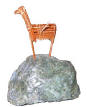 Museum-quality
willow animal effigies
of the Southwest
Archaic culture, art from a 4,000 year-old tradition by Bill Ott Museum-quality
willow animal effigies
of the Southwest
Archaic culture, art from a 4,000 year-old tradition by Bill Ott
Draft Freedom
can mean the difference between life and
death and show the way to your true and natural freedom.
Child Protection:
How to keep bureaucrats out of family affairs
Drug Smuggling
Why Taxes Are Not Necessary
Income Taxes are Cartoon Images of the Law
Hidden Truth about Income Taxes
Behind the Stock Market Illusion is Government
Collusion
Real Story of Money is Global Control
Confronting the Illegal Money System
The Price of Free Corn
 Get
a course to promote your business online, explode your sales Get
a course to promote your business online, explode your sales
 Get
software to promote your business online in less time Get
software to promote your business online in less time
Get
software to streamline your business and run it hands free.
The Native American
Holocaust |
|
WHO DEEMS WHAT IS SACRED?
A lawsuit brought by a group of Dakota
leaders claimed that Federal Indianlaw was being violated in regards to the
sacred oaks. A State judge ordered MnDot to conduct a preliminary study of
the historical importance of the site, delaying construction through the
spring and early summer. MnDOt contracted a consulting firm to prepare a
Cultural Resource Assess}ent (CRA) of the proposed reroute.
Leo Ronneng, Vice-Chairman of the Mendota Dakota, says he0wasn't optimistic
about the results of the study when he heard that Louis Berger and
Associates had been hired to conduct it. "85% of their income comes directly
from road projects. That's why they were chosen in the firstplace. They're
not going to bite the hand of MnDot that feeds them." Indeed, the CRA report
concluded earlier this summer that "the four bur oak trees...lack historical
significance."
"The study that MnDot did was just another smoke screen," Ronneng says.
"They took sixteen hours of testimony from elders then completely
disregarded it."
Joel Wainwright and Morgan Robertson of the University of
Minnesota
and Wisconsin-Madison's Departments of Geography, authored a book analyzing
the CRA's conclusions. Their critique of the study, released
July 13, 1999,found "the indigenous claims
have been marginalized ...by spurious representations of soil and
hydrogeomorphic data, the near-libelous excerpting of Native elders'
testimony, and the distortion of [information]to suit the state's claims.
Notwithstanding the report's conclusion, could the same data lead one to the
finding that the four oak trees are sacred? The answer is an empathic yes."
The two authors point out:
The CRA report cited Clyde Bellecourt, founder of AIM, with saying: "I
didn't even know that this spring existed then until Earth First! and the
Mendota Mdewakanton people came down here...never knew anything about this
spring until we knew it was going to be under destruction..."
"This claim," say Wainwright and
Robertson, "appears to undermine the credibility that this site is
well-known. The quote, however, is not referenced. Since we are left
wondering where the authors found thisquote, it is worth considering another
statement by Bellecourt" that wasn't in the report.
Bellecourt: "Spiritual Elders such as Chris Leith from Prairie Island, a
member of the Golden Eagle Society; Gary Cavender, a member of the State if
Minnesota Indian Affairs Council from Shakopee; Harry Charger from the
Cheyenne River Reservation in South Dakota; and Larry Cloud Morgan,
spiritual elder of the Anishinabeg Nation among others, have all come tothis
place and recognized how sacred the land is, and the spiritual nature of the
struggle to save this land from being paved over. This is the last remaining
bur oak Savannah along the
Mississippi River...we realize that
most of the bones of our ancestors have been dug up and removed. What we are
asking for, demanding, is that what remains of our culture, our sacred site,
and our dignity be preserved. There is no justification to continue this 500
years of genocide just so commuters can get from downtown to the Mall of
America three minutes faster."
"The CRA report's authors ignore or erase indigenous voices that counter
their claim," say Robertson and Wainwright. "Indigenous oral testimony is
edited to exclude all but the barest statements about the four trees and
Coldwater Springs."
"The case of Dick Black is particularly illustrative. In the CRA report,
Black is cited only as 'Dick Black, Iowa Tribe.' An unsuspecting reader
might guess that Black is a member of an indigenous 'tribe' in the state of
Iowa, and writing an affidavit because he is sympathetic to the Dakota
cause. What the authors do not reveal, however, is that Black is the
Repatriation Representative for the Iowa tribe of Oklahoma and currently
employed as a field inspector for the National Congress of American Indians,
for whom he ensures enforcement of Federal indigenous rights laws (Black
also teaches Repatriation law at the University of Missouri Law School).
Access to this information would surely change the way a reader considers
his testimony," say Robinson and Wainwright.
Dick Black (not cited in the CRA report): "It is my opinion and belief that
in the ground under or near the path of the proposed Highway 55construction,
are burial remains of ancestors of the Iowa tribe. My opinion is based on
numerous cultural and historical factors. The Oneoteculture - which came to
be part of what was later labeled by the United States government as the
Iowa tribe, used to live [in] Minnesota...There were burial remains which
were discovered near the Minneapolis/St. Paul International Airport and the
Veterans Hospital which belong to the Iowa and Dakota people...I am certain
that the Iowa tribe would have set-up a village around Camp Coldwater
because it has always been part of our tradition to set up villages around
natural springs."
"The authors frame the statements in such a way as to minimize their power
as evidence, and as statements delivering a particular truth," say
Robinsonand Wainwright. "In one case, that of Larry Cloud-Morgan, the
authors chose not to cite the following passage that indicates a continuous
oral history identifying the site as a location of a historic event."
Cloud-Morgan explained: "My grandparents and other elders told me about the
history of Fort Snelling
and the Dakota people who lived in the surrounding area. My grandparents
traveled to various Dakota Indian locations around
Minnesota, including the area near Fort
Snelling, for tribal celebrations.
Significantly, they visited ceremonies at the time of Little Crow near the
present Mdewakanton encampment. Through my grandparents...I am privy to the
oral tradition regarding sacred sites in the area slated for destruction if
the highway is rerouted."
THE EXACT CENTER OF THE EARTH
The CRA's authors relied heavily on
writing and maps left behind by European colonists to make their
determination of non-sacredness. While entirely discounting Native
testimony, the report gives weight to evidence such as an 1857 military map.
The map lacks scale and detail, yet a hand-drawn circle over a vacant
section of map, labeled "Approximate Location of Four Oaks," is cited as
proof of the four oaks' non-existence during the time the Dakota say they
served as a scaffold.
The authors rely only on those colonists that agree with their conclusions.
Missionary Gideon Pond is cited as saying that west of Mdewakanton country
at Lac Qui Parle, the Dakota buried their dead in coffins by the middle
ofthe 19th century.
"Do colonial citings of cultural practices in Western Minnesota have any
bearing on those 250 miles east? The implied assumption is that is the
colonial record captured all evidence of Dakota cultural practices," write
Robertson and Wainwright.
At the same time the CRA report ignores the records left by early European
settler Joseph Nicollet. A map-maker by trade, Nicollet left a wealth
ofletters, journals, and notes on the Dakota. He was the first to create an
accurate map of the lands between the Mississippi and the Missouri
Rivers.
His journals record his love for the prairie, his respect and understanding
of the Dakota Indians, and his fears for their future. "The
Mdewakantonpeople have always considered the mouth of the
Minnesota River to be the middle of all
things, the exact center of the earth," Nicollet wrote.
Transportation Commissioner Elwin Tinklenberg praised the CRA as "an
objective report," at a press conference organized for its release. A few
weeks later, as Tinklenberg was on the radio announcing plans for further
destruction, dozen of cops descended on Minnehaha park. "We have attempted
to ensure that the best possible information is available in guiding our
work in this corridor. And we continue to be open to on-going discussionof a
sincere and thoughtful nature but we will move forward," Tinklenberg said.
Coalition member Susu Jeffrey says she and her comrades have a better idea.
"This place is unique in all the world and must be preserved. This is the
Grand Canyon of the Midwest, the only true gorge in the 2300 mile length of
the Mississippi River. Oak savannah used to cover 10% of this area. Now we
have .02%. This project seeks to destroy the last grove of bur oak trees in
Minneapolis. We will not let that happen," Jeffrey says.
next
White Eagle Soaring: Dream Dancer of the 7th Fire


This is a crazy world. What can be
done? Amazingly, we have been mislead. We have been taught that we can
control government by voting. The founder of the Rothschild dynasty, Mayer
Amschel Bauer, told the secret of controlling the government of a nation
over 200 years ago. He said, "Permit me to issue and control the money of
a nation and I care not who makes its laws." Get the picture? Your freedom
hinges first on the nation's banks and money system. That's why we
advocate using the
Liberty Dollar, to understand the
monetary and banking system. Freedom is connected with
Debt Elimination for each individual. Not
only does this end personal debt, it places the people first in line as
creditors to the National Debt ahead of the banks. They don't wish for you
to know this. It has to do with recognizing WHO you really are in
A New Beginning: A Practical Course in Miracles.
You CAN
take
back your power and
stop volunteering to pay taxes to the collection
agency for the BEAST. You can take back that which is yours,
always has been yours and use it to pay off your debts. And you can send
others to these pages to discover what you are discovering.
Disclaimer: The
statements on www.real-dream-catchers.com have not been evaluated by the FDA.
These dream catchers are not intended to diagnose nor treat nor cure any
disease or illness
© 2007, Allen
Aslan Heart / White Eagle Soaring of the
Little Shell Pembina Band,
a
Treaty
Tribe of the Ojibwe Nation
|