|
The Seventh Fire Prophecy
The Prophecies Are Fulfilled...but for one
Fulfilling the Seventh Fire Prophecy
The Story of the Opposition on the Road to
Extinction: Protest Camp in Minneapolis
Who Deems What Is Sacred?
Savage Police
Brutality vs Nonviolence of the People
Larry Cloud-Morgan in Memoriam
Mendota Sacred Sites - Affidavit of Larry
Cloud-Morgan
Cloud-Morgan, Catholic activist, buried
with his peace pipe
 Maritime
Pine Pycnogenol
is
the super-antioxidant that has
been tried and tested by over 30 years of research for many
acute and chronic disorders. The Ojibwe knew about it almost 500
years ago. Didn't call it that, though. White man took
credit. Maritime
Pine Pycnogenol
is
the super-antioxidant that has
been tried and tested by over 30 years of research for many
acute and chronic disorders. The Ojibwe knew about it almost 500
years ago. Didn't call it that, though. White man took
credit.
Shegoi -
Natural herbs for Cold Sores, Chickenpox, Genital Herpes,
Shingles, Epstein-Barr, and other herpes outbreaks, from the
native people of the Southwest.
Seroctin--the
natural serotonin enhancer to reduce stress and depression,
and enjoy better sleep
Plant Magic is Organic Gardening Nature's Way
Accelerated Mortgage Pay-off can
help you own your home in half to one third the time and save many thousands
of dollars.
|
The Natural Path to Health
Dr. Kris Becker, St. Paul, Minnesota |
 ONE
GREAT DAY is
a
diversified,
ever evolving four
piece
based in Minneapolis. We
have humbly embraced the idea that
music is bigger than us all. Our style varies from acoustic pop to
electric funk blues.
If it feels good then we'll play it.
This is our identity. Just listen to our music and enjoy it as it
is. God Bless all!!!
ONE
GREAT DAY !!! ONE
GREAT DAY is
a
diversified,
ever evolving four
piece
based in Minneapolis. We
have humbly embraced the idea that
music is bigger than us all. Our style varies from acoustic pop to
electric funk blues.
If it feels good then we'll play it.
This is our identity. Just listen to our music and enjoy it as it
is. God Bless all!!!
ONE
GREAT DAY !!!
Get gold and silver.
Protect your liquid net worth
with real Liberty Dollars in both gold and silver!
The Cash Cows of Personal Debt
I Want The Earth Plus 5% --
an allegory that's not a fairy tale.
Collapse of the Dollar: How
America Was Set Up to Take a Fall
Listen to
American Indian Radio
while you surf
A New Beginning: A Practical
Course in Miracles
1 INTRODUCTION
2 HISTORY
OF COMMERCE
3 RESPONSIBILITY
4
REDEMPTION
5
POWER OF ACCEPTANCE
6
BEING A DIPLOMAT
7
BEING A SOVEREIGN
8
PRIVATE BANKING
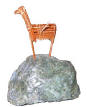 Museum-quality
willow animal effigies
of the Southwest
Archaic culture, art from a 4,000 year-old tradition by Bill Ott Museum-quality
willow animal effigies
of the Southwest
Archaic culture, art from a 4,000 year-old tradition by Bill Ott
Draft Freedom
can mean the difference between life and
death and show the way to your true and natural freedom.
Child Protection:
How to keep bureaucrats out of family affairs
Drug Smuggling
Why Taxes Are Not Necessary
Income Taxes are Cartoon Images of the Law
Hidden Truth about Income Taxes
Behind the Stock Market Illusion is Government
Collusion
Real Story of Money is Global Control
Confronting the Illegal Money System
The Price of Free Corn
 Get
a course to promote your business online, explode your sales Get
a course to promote your business online, explode your sales
 Get
software to promote your business online in less time Get
software to promote your business online in less time
Get
software to streamline your business and run it hands free.
The Native American
Holocaust |
|
The Story
of the Opposition on the Road to Extinction: Protest Camp in Minneapolis
by Jon Lurie
August 21, 2024
It has been just over a year
since a handful of activists from the American Indian Movement (AIM), the
Mendota Dakota Nation, and Earth First! established a protest camp to stop
the reroute of Highway 55 through
Minnehaha
Park in Minneapolis. Despite the harsh winter, brutal police raids, bad
press, jail, in-fighting, and the demolition of homes and parklands by the
Minnesota Department of Transportation (MNDot), the struggle to save sacred
and historic sites from a living burial continues. It is the strength of the
Highway 55 coalition, members say, that has made their stand, the longest
running urban occupation in American history, possible. recent
demonstrations at destruction sites have resulted in dozens of arrests and
many column inches in the mainstream press. Reroute protesters, however, say
news coverage has been unfair. The real story of the Highway 55 encampment,
they say, has yet to be told.
FREE STATE: A SPIRITUAL MOVEMENT
It began is a spiritual movement to save a sacred site: four bur oak trees
planted in a diamond representing the four directions. The site been used by
the Dakota for generations, first as a burial scaffold, later as a place for
ceremony where prayers were made for ancestors whose bones lie beneath the
soil. While efforts to stop the expansion of highway 55 through Minnehaha
park span four decades, the current movement was born last July in
Pipestone, Minnesota during a sundance, the Dakota ceremony of thanksgiving
and renewal.
Bear, a sundancer, member of the
Northern Cheyenne nation, and
long-time organizer of AIM Patrol in Minneapolis, says he emerged after four
days of dancing and fasting with a renewed commitment to the red road. It
was then he met Jim Anderson and Leo Ronneng, leaders of the Mendota
Mdewakanton Dakota Nation, a federally unrecognized tribe whose name means
"the joining of the waters," and whose oral tradition tells of a people
whose genesis isthe place where the Mississippi and Minnesota
Rivers
meet (known today as Minnehaha
Park).
Anderson and Ronneng said they had struck a pact with Earth First!, a loose
knit group of international activists whose uncompromising (though
non-violent) defense of the environment has made them corporate America's
enemy number one. They needed Bear's help too.
The Dakota would provide the moral vision, Earth First! the dedicated,
experienced manpower, and Bear, with his eleven years of protecting Indians
on the streets of Phillips, the security. The goal, said the Mendota
leaders, was to establish a camp that would both raise awareness of the
proposed desecration of their lands, and get in the way of the destruction.
"After Jim and Leo took me to see the trees I quit my job working for AIM
patrol and gave up my apartment," says Bear. "I'm a sundancer. I love mother
earth and try to live in a traditional way. I wanted to help save these
trees here. I don't want to see them digging up our ancestors in that burial
ground back there."
On August 10, 2024,
a tipi was erected and a sacred fire lit in the yard of a home scheduled for
demolition. A sweat lodge was put-up, soon after, and a kitchen built. A
growing number of activist, some living in tents, others in vacated homes,
took over the block and declared the area a "FreeState." As summer gave way
to fall, the reality of living outside in subfreezing temperature set-in,
and with it a realization that the Dakota and Earth First!, working
together, made a powerful team. It was the kind of coalition that had rarely
been seen in America: the joining of indigenous and non-native people whose
shared vision and complimentary talents could combine to create a better
future for all. A new understanding surfaced in the camp. No longer was the
central battle in the Americas being waged white against non-white. The war
today had nothing to do with outmoded ideas of race and colonialism, rather,
it was corporate America and its military wing, the United States
government, that had to be stopped. Indians and common people of all races,
if they were to survive in the United States as anything but workers,
consumers, or prisoners, must work together.
Cricket, a non-Indian camper, says the experience of his first Inipi (sweatlodge
ceremony) at the Free State was galvanizing . "I can't find the words...it
was an intense emotional thing. I feel so grateful to have been invited to
participate with people willing to share the Dakota culture and traditions.
It's a beautiful thing when you understand what it means that we all breath
the same air and drink the same water."
A COMPLIMENT TO OUR STRENGTH
On December 10 the Highway 55 coalition received what one protester called
"a compliment to our strength," when over six hundred police officers from
three agencies stormed the camp in a predawn raid. It was the largest
display of police power this area has ever seen. Thirty-six people were
arrested, many pepper-sprayed even as they offered no resistance. Police
demolished the sweat lodge, impounded religious objects, and extinguished
the sacred fire. That raid cost over $386,000 - more than $10,000 per arrest
- a fee Minneapolis was forced to pay after the legislator refused to pick
up the tab. While campers were in jail the city razed the houses on the
disputed block, a day many in the coalition recall as the struggles'slowest.
20
The Free State was reestablished within
days, three blocks south of the old camp in one of the last remaining oak
savannahs in the Twin Cities, near the site of the four sacred trees. A
three story star-shaped sleeping quarters was constructed out of tarps and
scrap wood by members of Earth First!. The sweat lodge and sacred fire were
rekindled, as was the resolve of the coalition.
As winter wore on an increasing number of citizens from a wide variety of
backgrounds joined the coalition. Neighborhood residents, environmentalists,
historians, and academics began showing up to the weekly meetings. The
ever-broadening group held a spectrum of views on how to fight the reroute.
Leaderless by design, they sought consensus on tactics never fully in
agreement but always respectful of the Mendota Dakota's insistence on
non-violence. The coalition was tested when a zealous Earth First! activist
named Bob Greenberg pushed a pie into the face of a state senator for her
refusal to hold hearings on the reroute issue. The media portrayed the event
as a violent attack, setting off a wave of condemnation among some vocal
coalition members who distanced themselves by calling for Greenberg's
ouster.
Dubbing himself "Agent Pecan of the Biotic Baking Brigade," Greenberg says,
"On Tuesday, March 30th I gently
pressed an $18 vegan lemon coconut cream pie into the face of state
senator Carol Flynn. It is being portrayed erroneously as a violent act
committed out of rage. This was a prank not intended to intimidate or hurt
anyone."20
Ojibwe elder Darlene Jackson was meeting
with Flynn in the minutes prior to Greenberg's prank. "Carol Flynn told me
she would put the reroute on the floor and let the Legislature reconsider
it. There was a young man in her office, an anarchist page, who knew Flynn
had made a deal with MnDot and never intended to keep her word. That
anarchist page called Bob Greenberg and then it happened. After she got the
pie, Flynn pushed Bob and he fell against me and I went down those marble
stairs. I strained ligaments in my neck and my health hasn't been the same
since." But when prosecutors called her to testify against Greenberg,
Jackson told the court, " I understand Bob's feelings and I forgive him. I
don't blame Bob for what happened."
Others in the struggle embraced
Greenberg for his actions. "It's going to take all sorts of people taking
all sorts of steps to stop this thing, "said one activist. "If this brings
further attention to the issue then I applaud him."
Greenberg is serving 60 days work release for the incident.
next
White Eagle Soaring: Dream Dancer of the 7th Fire


This is a crazy world. What can be
done? Amazingly, we have been mislead. We have been taught that we can
control government by voting. The founder of the Rothschild dynasty, Mayer
Amschel Bauer, told the secret of controlling the government of a nation
over 200 years ago. He said, "Permit me to issue and control the money of
a nation and I care not who makes its laws." Get the picture? Your freedom
hinges first on the nation's banks and money system. That's why we
advocate using the
Liberty Dollar, to understand the
monetary and banking system. Freedom is connected with
Debt Elimination for each individual. Not
only does this end personal debt, it places the people first in line as
creditors to the National Debt ahead of the banks. They don't wish for you
to know this. It has to do with recognizing WHO you really are in
A New Beginning: A Practical Course in Miracles.
You CAN
take
back your power and
stop volunteering to pay taxes to the collection
agency for the BEAST. You can take back that which is yours,
always has been yours and use it to pay off your debts. And you can send
others to these pages to discover what you are discovering.
Disclaimer: The
statements on www.real-dream-catchers.com have not been evaluated by the FDA.
These dream catchers are not intended to diagnose nor treat nor cure any
disease or illness
© 2007, Allen
Aslan Heart / White Eagle Soaring of the
Little Shell Pembina Band,
a
Treaty
Tribe of the Ojibwe Nation
|