|
|

powered by  bravenet.com
|
Natural Serotonin from Seroctin
What is Seroctin?
How does Seroctin work?
Physiology of Seroctin
Seroctin Patent
Testimonials for Seroctin, the Natural
Serotonin Optimizer
Doctors Fail to Recognize Life-Threatening
Serotonin Syndrome
SSRI Makers Use Media To Reel In Pregnant
Women Customers
CDC Downplays Birth Defects of SSRIs to
Boost Sales
FDA Protects SSRI Makers With Misleading
Suicide Warning
The Dangers of Prozac -
part 2
A Dark Side to Prozac
Real SSRI Side Effects
Prozac and SSRIs Exposed
Eli Lilly Settles Prozac Lawsuit
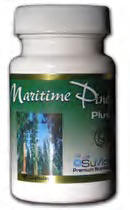 Maritime
Pine Pycnogenol
is
the super-antioxidant that has been tried and tested
by over 30 years of research for many acute and chronic
disorders. The Ojibwe knew about it almost 500 years ago.
Didn't call it that, though. White man took credit. Maritime
Pine Pycnogenol
is
the super-antioxidant that has been tried and tested
by over 30 years of research for many acute and chronic
disorders. The Ojibwe knew about it almost 500 years ago.
Didn't call it that, though. White man took credit.
Shegoi -
Natural herbs for Cold Sores, Chickenpox, Genital Herpes,
Shingles, Epstein-Barr, and other herpes outbreaks, from the
native people of the Southwest.
Plant Magic is Organic Gardening Nature's Way
Accelerated Mortgage Pay-off can
help you own your home in half to one third the time and save many
thousands of dollars.
The Natural Path to Health
Get gold and silver.
Protect your liquid net worth
with real Liberty Dollars in both gold and silver!
Listen to
American Indian Radio
while you surf
A New Beginning: A Practical
Course in Miracles
1 INTRODUCTION
2 HISTORY
OF COMMERCE
3 RESPONSIBILITY
4
REDEMPTION
5
POWER OF ACCEPTANCE
6
BEING A DIPLOMAT
7
BEING A SOVEREIGN
8
PRIVATE BANKING
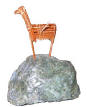 Museum-quality
willow animal effigies
of the Southwest Archaic culture, art from a 4,000
year-old tradition by Bill Ott Museum-quality
willow animal effigies
of the Southwest Archaic culture, art from a 4,000
year-old tradition by Bill Ott
 Get
a course to promote your business online, explode your sales Get
a course to promote your business online, explode your sales
 Get
software to promote your business online in less time Get
software to promote your business online in less time
 Get
software to streamline your business and run it hands free. Get
software to streamline your business and run it hands free.
|
|
SSRI Makers Use Media To Reel In Pregnant Women as Customers
by
Evelyn Pringle
Big Pharma's regular use of the media as
paid shills, masquerading as caring doctors while feeding the public
misinformation about the risks of prescription drugs, is disturbing, to say
the least. However, when the goal is to increase profits through the sale of
drugs to pregnant women that are known to be harmful to the fetus, the
media's participation is downright despicable.
Since June 27, 2007, nearly every major news outlet in the US has broadcast
the story that two new studies published in the New England Journal of
Medicine found a low risk of birth defects in babies born to women who took
selective serotonin reuptake inhibitor antidepressants (SSRI's) during
pregnancy.
SSRI's include Paxil by GlaxoSmithKline; Zoloft marketed by Pfizer; Prozac
by Eli Lilly; Celexa and Lexapro from Forest Laboratories; Luvox by Solvay,
and generic SSRI makers Barr Pharmaceuticals, Ranbaxy Labs and Genpharm.
On June 27, 2007, the headline that appeared in countless news outlets that
run articles from the Associated Press stated: "Antidepressants Not Risky
for Defects."
ABC News reported on June 29, 2007, "Antidepressants Safer Than Believed
During Pregnancy,"
"Antidepressants not linked to birth defects," stated the internet headline
for News-Medical.net, on July 5, 2007.
These headlines outraged experts knowledgeable about the true risks of birth
defects, but none drew more outrage than the headline in a press release put
out by the US Centers for Disease Control the day before the story broke
which stated: "New Study Finds Few Risks of Birth Defects from
Antidepressant Use During Pregnancy."
"The reassuring attitude promoted in the CDC's press release flew in the
face of evidence linking SSRI exposure during pregnancy to increased birth
defects, and the additional evidence of SSRI toxicity in the developing
brain," says Dr Peter Breggin, author of The Antidepressant Fact Book and an
expert on SSRIs.
"Women and their doctors who only catch the headlines created by these
studies are being grossly misled," he advises. "SSRI's should never be used
during pregnancy."
Dr Breggin notes that the CDC instructs pregnant women to speak to their
doctors about the risks and benefits of taking SSRI's, but says, "doctors
will have read the headlines inspired by the CDC and imagine there is little
risk."
The paper, "Exposure to SSRI Antidepressants In Utero Causes Birth Defects,
Neonatal Withdrawal Symptoms and Brain Damage," by Dr Breggin and Ginger
Breggin, will be published in the upcoming issue of the Ethical Human
Psychology and Psychiatry journal to refute the findings of the NEJM
studies.
CDC Report and Media Coverage Misleading
The CDC claims the use of SSRI's during pregnancy is justified on the basis
that depression has its own hazards. "But these hazards," Dr Breggin states,
"pale in comparison to the upheaval that will befall new mothers, fathers
and the extended families of the children who are born with profound birth
defects."
In addition to disputing the claim that birth defects are rare, experts say
the headlines are deceptive because: (1) the studies referred to were
limited to women taking SSRI's in the first 3 months of pregnancy; (2) some
birth defects develop later in pregnancy; (3) stopping the drugs at the end
of 3 months, or at any time, can result in a serious withdrawal syndrome;
(4) infants experience a withdrawal syndrome after birth, and (5) the
headlines do not mention all the other adverse effects associated with
SSRI's.
The headlines dilute the findings of the many studies that have shown
serious withdrawal symptoms in newborns exposed to SSRI's, including
high-pitched or weak crying, tremors, irritability, convulsions, poor muscle
tone, abnormal sleep patterns, feeding difficulties, rapid breathing and
respiratory distress, and increased admissions to intensive care units.
In discussing a 2004 study published in the Pediatrics journal, lead author
Dr Philip Zeskind was quoted in the February 22, 2004, Sunday Telegraph as
stating: "What we've found is that SSRI's disrupt the neurological systems
of children, and that this is more than just a possibility, and we're
talking about hundreds of thousands of babies being exposed to these drugs
during pregnancy."
"These babies are bathed in
serotonin," he said, "during a key period of their development and we really
don't know what it's doing to them or what the long-term effects might be."
Experts say the headlines are also misleading because they infer that no
birth defects were found in the studies when, in fact, the CDC study further
confirmed associations between SSRI use and the occurrence of
craniosynostosis and omphalocele, as well as certain types of heart defects.
The study also found anencephaly, babies born without a forebrain, to be 2.4
times greater in women taking an SSRI in the first trimester. "This is a
catastrophic fatal birth defect that is not correctable," Dr Breggin points
out. In babies born with anencephaly, much of the brain does not develop,
and the babies are either stillborn or die shortly after birth, according to
the National Institute of Child Health and Human Development.
SSRI Makers Use Media To Reel In Pregnant Women as
Customers 1
1
-
2
-
3
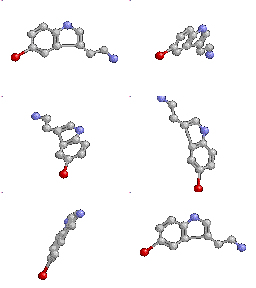
Seroctin helps the body make its own natural serotonin
375 mg per capsule with 120 capsules per bottle.
$24.99 Bottle + $5.00
shipping
Seroctin is the natural serotonin optimizer.
Order
Seroctin now...
Click here to
Order
White Eagle Soaring: Dream Dancer of the 7th Fire


This is a crazy world. What can be
done? Amazingly, we have been mislead. We have been taught that we can
control government by voting. The founder of the Rothschild dynasty, Mayer
Amschel Bauer, told the secret of controlling the government of a nation
over 200 years ago. He said, "Permit me to issue and control the money of
a nation and I care not who makes its laws." Get the picture? Your freedom
hinges first on the nation's banks and money system. That's why we
advocate using the
Liberty Dollar, to understand the
monetary and banking system. Freedom is connected with
Debt Elimination for each individual. Not
only does this end personal debt, it places the people first in line as
creditors to the National Debt ahead of the banks. They don't wish for you
to know this. It has to do with recognizing WHO you really are in
A New Beginning: A Practical Course in Miracles.
You CAN
take
back your power and
stop volunteering to pay taxes to the collection
agency for the BEAST. You can take back that which is yours,
always has been yours and use it to pay off your debts. And you can send
others to these pages to discover what you are discovering.
Disclaimer: The
statements on www.real-dream-catchers.com have not been evaluated by the FDA.
These dream catchers are not intended to diagnose nor treat nor cure any
disease or illness
© 2007, Allen Aslan Heart / White Eagle Soaring of the Little Shell Pembina Band, a
Treaty
Tribe of the Ojibwe Nation
|