Ask yourself the following question:
If the U.S. Center of Disease Control states that over 86%
of all doctors office visits can be attributed to prolonged periods of
stress, don’t you feel it’s important to offset the effects of stress before
it becomes a problem?
Due to it’s long list of symptoms (both physical and
emotional), stress is one of the largest growing segments of health-related
complaints in the world. One of the main impacts that stress has is the
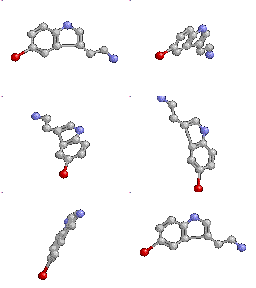
alteration of Serotonin balance and its corresponding neurotransmitters.
Twenty five years ago researchers initiated a study on
population growth in animals to determine why reproductive rates are
commonly higher in the spring than in other times of the year.
The results of this study uncovered the astonishing fact
that a unique family of compounds present during a short time period in the
springtime growth of certain plants enhanced the feeling of well-being in
many animals. Consequently, this feeling of wellbeing increased their libido
and ultimately their reproductive patterns.
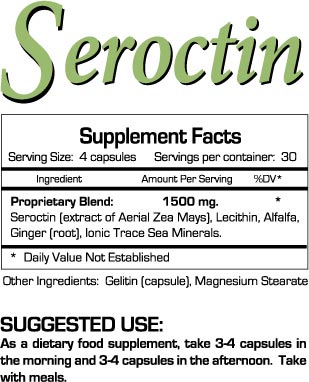
Since the time of this discovery, this unique collections of
natural compounds have been referred to as Seroctin. Subsequent to
discovering Seroctin’s unique nourishing influence, the main challenge has
been discovering a way to naturally generate sufficient quantities of
Seroctin to realize it’s benefits in humans.
Since 2001, Suvida has made quantum leaps in optimizing the
growth, quality and concentration of Seroctin, which has been demonstrated
in lab, animal, and human testing.
Prior to testing for human consumption, Seroctin safety,
toxicity, chronicity and sexual tests were conducted on a variety of
animals, from lemmings to rabbits, ostriches to quail and even the giant
Panda.
Animal tests illustrated improved mood, more frequent sexual
activity along with measurable improvements in fertility and embryo
survival, higher sperm counts, enhanced egg viability and faster growth of
babies.
Once the success of these animal tests was demonstrated,
similar tests were conducted on both male and female human control groups. A
number of key findings include the following:
Seroctin generated nearly a 50% rise in serotonin levels
when called upon to do so.
As mentioned earlier,
tryptophan is the amino acid from which serotonin is made.
It is also the least abundant of essential amino acids in
most diets. This means that a very limited amount of trytophan is usually
available for making serotonin.
Trytophan dioxygenase (TDO) converts trytophan to kynurenine,
an amino acid excreted in urine. With increases in TDO activity, kynurenine
is made at the expense of serotonin. Therefore TDO activity is a good
indicator of the amount of tryptophan being converted into serotonin. The
greater the TDO activity, the less serotonin is being made. In the results
of this study, TDO activities were decreased by as much as 50%, leading to a
significant rise in the amount of tryptophan available to the brain for
serotonin production.